So Glad

It is funny how one would spend all this time trying to figure out what one’s heart wants … And go trudging down these labyrinthine paths toward the center of one’s being, one’s deepest, most closely guarded, secret dreams … And one could finally come to a door where one least expected to find a door, but would sense the unmistakable energy pent up on the other side … And so one knocks … And the door opens …

And what spills out is a whole bunch of baggage, issues, fears, negative beliefs, self criticism … As it turns out, one can bury one’s desires so thoroughly that it can become quite a challenge, bringing them out to the light of day, once one resolves to do so. 

The attempt to make a video of me playing a song I wrote on the piano took me down a long road into a thicket of anxiety that snowballed into all sorts of self-judging non-fun. It was just not coming out in a way I could stand. So I abandoned that project FOR NOW. But I made this video instead. 

This one I kept, because I set out telling myself that – as the saying goes – I was totally free to make the worst shit in the world, and I could delete it instantly if I chose. I mostly just wanted to put something between myself and my feelings of failure. But I ended up sort of liking what came out. 

This is like a doodle. I’m playing the keyboard in the garage, singing a tune I made up to convince myself that things were ok. And it must have worked, because now I sort of feel like they are. 

On the Artistic Freedom of Impermanence


This way of looking at art and life has been so much in the forefront for me lately. Each moment dies into the next. Each moment of beauty is completely unique and irrevocably fleeting. More and more I am trying to savor the impressions of beauty, love, connectedness as each moment’s inherent perfection dissolves into the different perfection of the next moment.

I am learning about the sweetness of appreciating and releasing the exquisite combination of notes, the heartbreakingly vibrant vision, the brief consonance of hearts as they cross paths on their separate journeys, the delicacy of any created thing in the face of time.

For beautiful, and for inspirational, I recommend the video below. In this “talk” which is mostly music, but also some very insightful words about music and the moment, violinist, songwriter and improvisation artist Kishi Bashi says that this philosophy helps him feel freer to take artistic risks, knowing every creation and every experience is temporary. Since everything is always passing, and we’re not tied to any one expression forever, one might as well follow one’s heart.

Yes? Why not, say I.

Thank You, Krishna Das

Thank You, Krishna Das

Where would I be if I had never heard of Krishna Das?

Probably somewhere being sad and pitiful. 

Well, ok. I’m still completely capable of being sad and pitiful even having heard of Krishna Das. But I think I am at least a little less so for having heard his music and for having sung along, for having read his writing and for having seen so many of my own struggles reflected there — for having been in his presence and chanted the Divine Names and felt the vibration of his voice and the vibration of my voice and the vibration of all those other people’s voices meeting like old friends in outer space, dancing together and becoming one joined vibration of devotion. 

Like at today’s workshop at the Arvada Center for the Arts and Humanities. 

“I’m a born moper,” he said. He described himself as a baby, crawling around mopily. 

In his memoir Chants of a Lifetime, he talks about his long and intimate relationships with depression, drug addiction, feelings of worthlessness, guilt, shame, regret. Even today he talked about depression as something that still comes around, still sometimes brings everyday life to a halt. 

And he talked about how singing the names of God helps. 

Because, he says, these names have power. They’re more than affirmations or reminders for our brains. They are “revealed” names, seen or heard or perceived by advanced beings and passed on to other humans for the purpose of awakening our souls’ memory, our awareness of the divinity that lives within us. They are like soft and subtle cloths that, with infinite gentleness, wipe away the deep layers of dust from our mirror hearts so that we can again reflect the light of God into the world and into our lives. 

And if he’s an example of this, one can reflect a lot of damn light without having to be perfect, or vanquish the inner struggles forever, or even give up swear words (thanks for that!!!).

It’s funny — just this morning after church someone asked me where I get the songs I lead. “They’re not hymnal songs,” she said. I told her, some of them are! But mostly they are chants, and I collect chants. I go to different circles and retreats and places of worship (and sometimes bookstores and YouTube channels) and learn all the chants I can. 

“What got you into that?” she asked. I said that I’d always been a singer, but at some point about ten or twelve years ago I suddenly felt an urge to take a break from choirs and go seek out ways to practice non-performance sacred singing. And I’ve been doing that ever since. Then I started sharing the chants I’d learned. Providing opportunities for people to connect with the sacred and to feel what’s in their hearts and to explore and express their utterly unique voices through chant and other forms of sacred singing has become one of the biggest passions of my life. 

But why?

Krishna Das says — “Why are we doing this? Because we want our level of suffering to come down.”

Ok, I’ll take that. 

We want to heal our small and big hurts, from the daily beatings our sensitive egos endure to the deep wound of our belief in separateness. For all of these painful places, chant can be a balm. And as we become (to use another of my favorite KD phrases) “gradually but inevitably” more peaceful, we also become more gentle with others, more compassionate, more available to help those of our fellow humans who are suffering — and who may be lashing out around themselves as a result of their own pain. 

Chanting is just one of many devotional acts that have a potential ripple effect that can contribute to the healing and evolution of this organism called humanity. But it’s the one that called me, and I’ve been following that call to the best of my ability. 

In Sufism they say that teachings are wonderful and helpful, but the juiciest stuff, the stuff that really gets you to grow and change, is transmitted on the energetic plane by being in the teacher’s presence. (And time and space being, well, not quite the fixities we think they are, a profound transmission can happen in a brief encounter, or across vast distances, or even after the teacher has left the body. The personalities involved do not even have to know each other. Our beings are operating on many more levels than we’re aware of.) I am so grateful for what I have learned from Krishna Das from his writings and recordings — and I also like to put myself, from time to time, when possible, in my teachers’ physical presence. Just to see what happens. 

What happened this time when I chanted kirtan with Krishna Das in Arvada, CO?

I went swimming. 

The experience of chanting today was kind of like having my heart taken out of my body, dipped in kerosene, and lit on fire — then dropped into a sea so cool and so dense with salt that it didn’t sink and didn’t burn but floated and blazed there in the middle of the ocean —

Then every now and then my heart would look back at my body and see it doing silly things, rocking back and forth, raising hands in the air, and sometimes clutching at that space in my chest where the heart goes, as though yearning to physically grasp and take hold of that oceanic feeling and plant it there forever …

As I said, Silly. 

But so human. 

That feeling doesn’t stay forever — at least not on my side of enlightenment (ie, the side that isn’t enlightened). But next time I am depressed or feeling worthless or lying in bed furious and unable to sleep, wishing I could wake someone up and punch them (true story), maybe I’ll remember just a hair sooner that there ARE ways to restore equilibrium, to come back to grace. 

Thanks for this, KD, and for everything. You’re awesome. 

(I love this song so much.)

Trance Dance

Last night I had the unusual and lovely experience of assisting Sam at a trance dance he was leading. It was totally spur of the moment — I had planned to go to another, earlier group meeting but didn’t get off work in time. So I’d just found myself uncommitted for the evening when he texted to say more people had RSVP’d for his event than he’d counted on and he was desperately seeking a helper. I’d done it before (and Sam had very generously taken my car waaaaay south for a free oil change just that very afternoon) so I said sure, I’d do it.


Sound and light

 
Sam’s ecstatic dance events blend shamanic breathwork with a type of blindfolded conscious movement practice that we first learned from Vic Day and the MidMOtion Collective when we lived in Missouri. Participants have an inner journeying experience in a group environment. My job: keep folks from slamming into walls or whapping each other on the head while dancing to world music with their eyes covered by a bandana. And, he said, I could slip out before everyone “came back” at the end of the dance, and still have some time to myself that evening.

It has been a couple of years since I’ve played the part of trance dance helper, and it was interesting to see how Sam’s style of maneuvering people away from collision has evolved. I found myself trying to gauge what was about to be a gentle physical interaction and what could be a painful smack — and get out of the way of the former while attempting to prevent the latter. I didn’t want to err on the side of caution, because I know that the negotiation of energetic boundaries can be an important aspect of the experience for the dancers. On the other hand, nobody wants a kick in the elbow while they’re peacefully doing a yoga headstand.

A few times I also caught myself thinking something like “No, it should be this way, not that way” — and I had to tell my “take charge” part to take a step back.

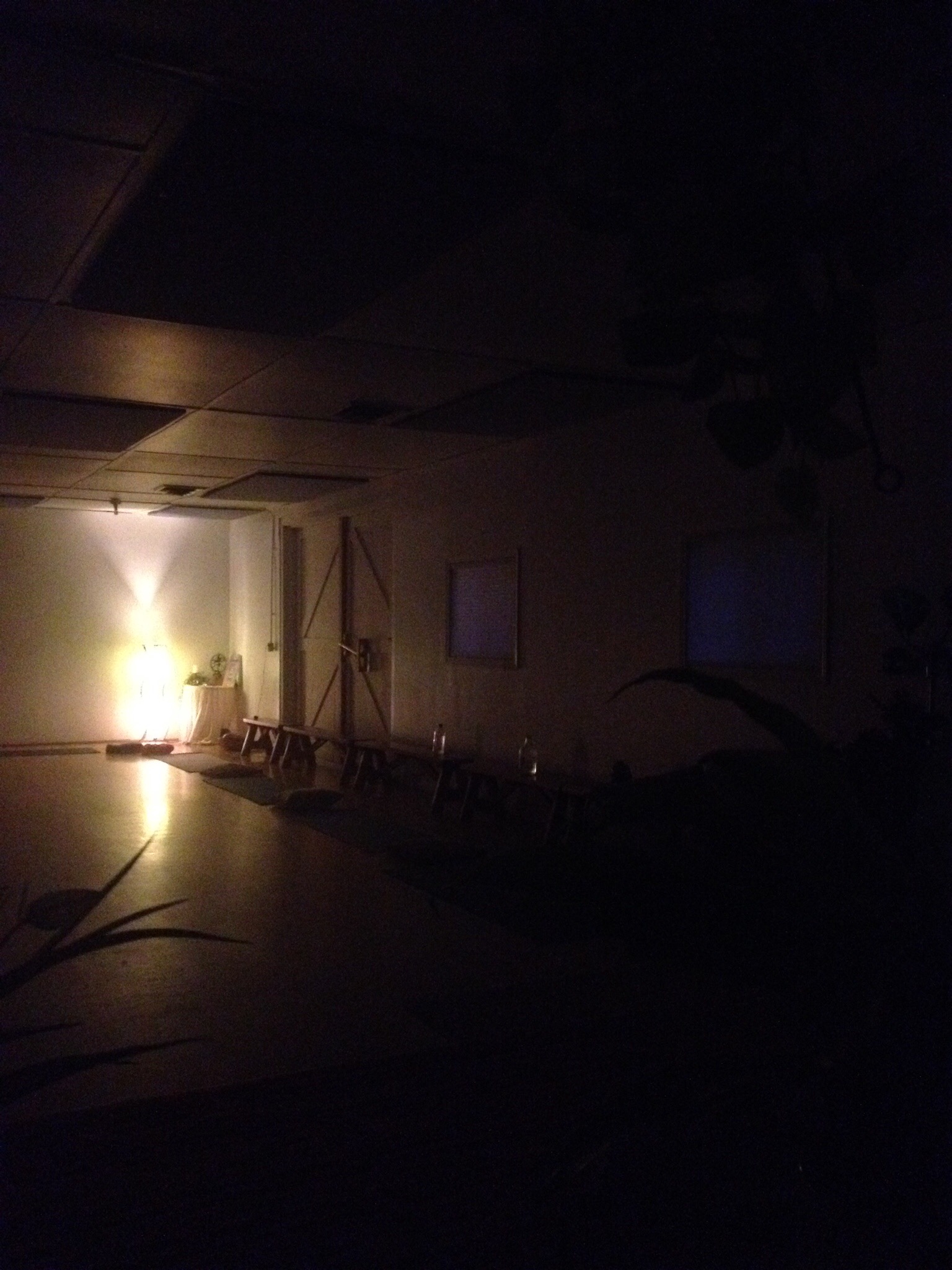
The dance space

Most of what I did was simply watching the dancers and feeling the energy and trying to create a container that was safe but not obtrusive. I wanted to be like the walls of the space, sturdy and reliable — so much so that you never have to think about the work the walls are doing. But unlike the walls, I moved among the dancers. In reflection I can see that this, too, was a dance.

A different kind of dance, though — one in which I had full access to my sight. And I’ll admit that the “I can see you but you can’t see me” thing made me a little uncomfortable. When I caught myself admiring the fluidity of one bearded, dreadlocked guy’s spiraling flow, I noticed myself feeling like I was somehow cheating by watching someone’s private dance.

And when I saw this other girl curled up on the floor with her hands covering her head — then watched her slowly, slowly start to move — and finally lift her face and raise her chest upward — so that I could practically see the light pouring from her clawed-open heart — and tears sprung to my eyes, I told myself — stop it now — you’re projecting.

Well, sure. A room full of blindfolded people expressing their souls’ primal movement is pretty much a blank canvas for projection. I’m looking at them and seeing aspects of myself. And I’m also appreciating the uniqueness of each person’s steps which, all together, including mine, make up the Dance.

Later it occurred to me that witnessing could itself be a valuable part of this ritual. Sam reflected that to me as well when he commented that I’d seemed to be trying to disappear into the woodwork all evening and I admitted my discomfort with what felt like a voyeuristic position. 

“No,” he told me, “People actually like knowing that you’re watching them — watching over them, really. It makes them feel safe, protected, free to explore the outer reaches of movement. ”

Hmm.

By the time the pounding drumbeats had smoothed out into oceanic tides of gentle sound, and the dancers were all lying on their backs, blissed out, it had become clear to me that I couldn’t exactly leave. It would feel too strange — like the closed container had sprung a leak before arriving at its destination. Although sitting in the sharing circle was the part of the ceremony I least looked forward to — feeling awkward as a watcher among the temporarily sight-deprived — I knew I had to join in. 

It’s funny how I always assume people are making negative judgments about me, and they’re only waiting for a lull in the conversation to spit them out. Does everyone do that? I certainly expected these cute young Boulderites to see me as a strange hulking ghost whose purpose was mainly to disrupt their shared intimacy with my weird silent vibes. 

What they actually told me:

“In my mind I think of you as Rainbow Lady … Holding the sacred space.”

“You had such a beautiful energy. You grounded the whole ritual.”

“Your name is Angie? Oh, like an angel, of course.”

“You really brought it, girl!”

This, accompanied by many hugs, without my asking for any feedback at all.

How striking that if I could have, I would have skipped that part entirely. And I never would have heard any of that — because of my fear of being dissed by the in crowd. 

Who says they’re in? And who says I’m out? 

Maybe in reality, I have more freedom AND more safety than I think. Maybe it’s me who chooses to move in and out of circles as they suit my needs in any given moment — or as I am called by a power greater than myself. Maybe my whole dance of life is like my dance last night — gliding from my place of watchfulness on the sidelines, to active intervention where I see I can help, to, when my courage is great enough, open and vulnerable relationships with other human beings. 

With my eyes open, I have more choice, and more responsibility. I have more opportunities to practice compassion for others and for myself. 

 
 In this sketch I tried to represent some hint of the presence of music as a physical force, sound waves that filled the room and wrapped our moving bodies like swaddling clothes. Out of this chaos, something was surely being born. 

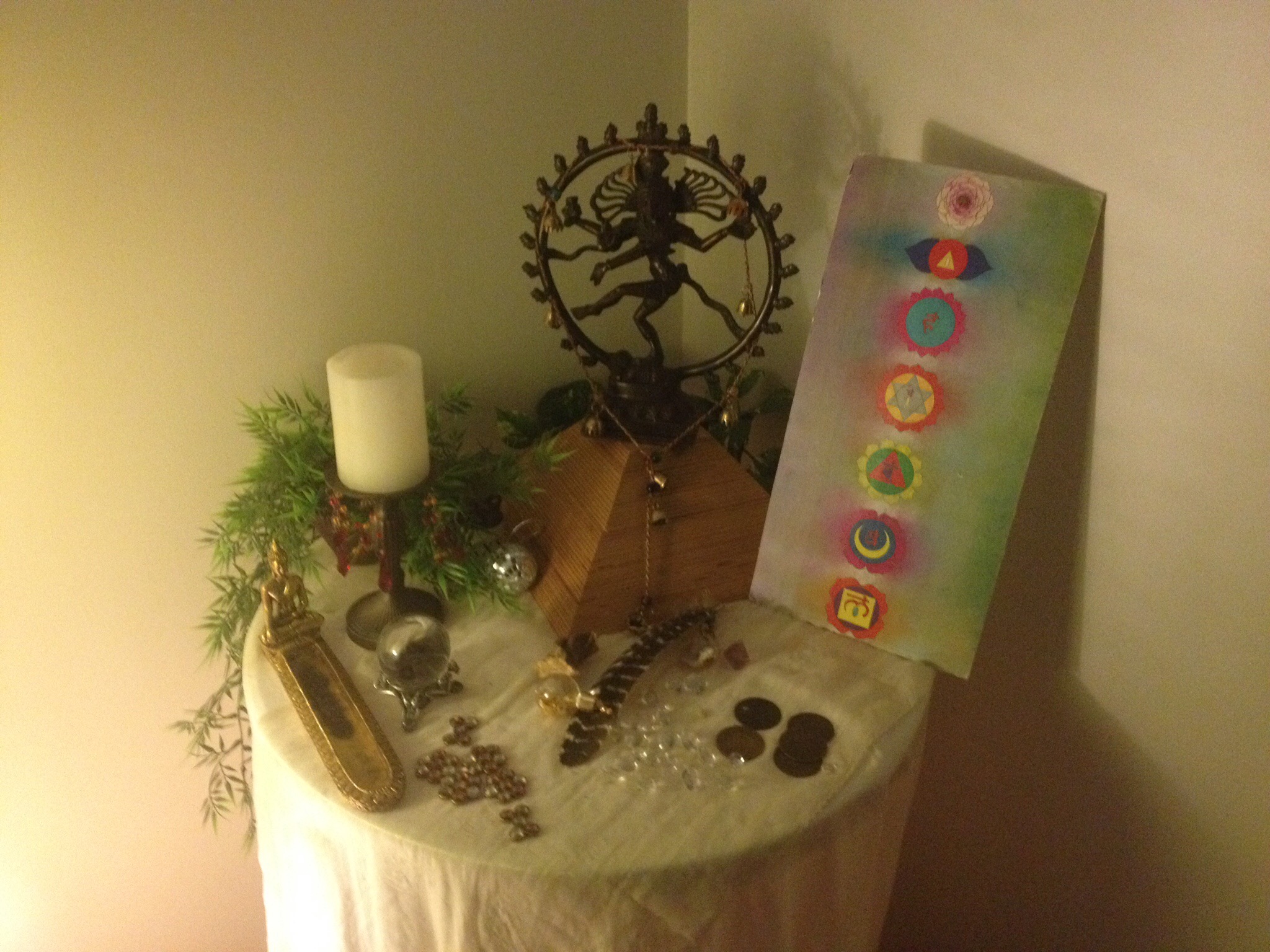
Shiva altar

Yay! Mosaic!

If you were in my choir — which is Mosaic Gospel Choir, part of the Wesley Fellowship at CU in Boulder, CO — you would have gotten this awesome reminder from our choir director, Gary, yesterday:

Because God loves the shit out of you. And so do I.

And that is just one reason why I am so excited for our first rehearsal of the spring season, which is tonight!

20150114-205515-75315753.jpg

I joined this choir last fall with Sam and I’ll admit that at first I had, not a love-hate, but maybe a love-indifference relationship with the group, and until about two thirds of the way through the semester I was like “Yeah this is pretty fun, but I probably won’t do it next semester.” I think this was because I had to miss a few rehearsals and the rehearsals were already shorter than most choirs I’ve been in, so perhaps it took a little longer than average for me to be fully brainwashed, I mean absorbed into the juicy goodness of this choir.

But then one day I was going through some emotional crap and I found myself singing one of our songs over and over again, and then even doing what the song said:

There’s power when you call His name,
With faith to believe why He came.
Even with the faith of a mustard seed,
Just call His name when you’re in need …

(As you say that in your head, make sure to put in lots of bad-ass triplets and syncopation.)

Then the call-and-response,

Call Him — Jesus — Call Him — Jesus —
Call Him ———

(that’s where you hold it out really dramatically)

So that’s what I started doing. Just speaking the Name, and letting all of the pain and struggle and need pour out through the voice. And what do you know? Emotional crap gone!

God literally loves the shit out of me.

Of course the shit comes back. Because you know, we give our problems to God but we obsessively grab them back again. And we give them up again. And we take them back again. But throughout this process nothing has been more comforting to me than singing the Name.

So … Thank you, Mosaic Gospel Choir, for bringing me back into conversation with Jesus! I appreciate it soooooo much!

And not only that but, it’s the kind of gospel choir that talks to Krishna too. One of the first songs we learned was George Harrison’s “My Sweet Lord”! And you don’t have to pretend that you’re committed to any particular Christian denomination. And you can be as “out there” as you are, in any way that you are. All you have to do is want to sing and share the love in your heart with a bunch of other awesome people and with God.

And, astoundingly, when I am singing in this choir, my body feels like the exactly most perfect vehicle for the expression of my unique praise. What drew me to gospel music in the first place was that what I do when I worship — stand up, raise my hands, move my hips and my head and my feet — isn’t weird. And this group does me one better: if my belly sticks out between my shirt and my pants when I do stretches — it almost feels ok.

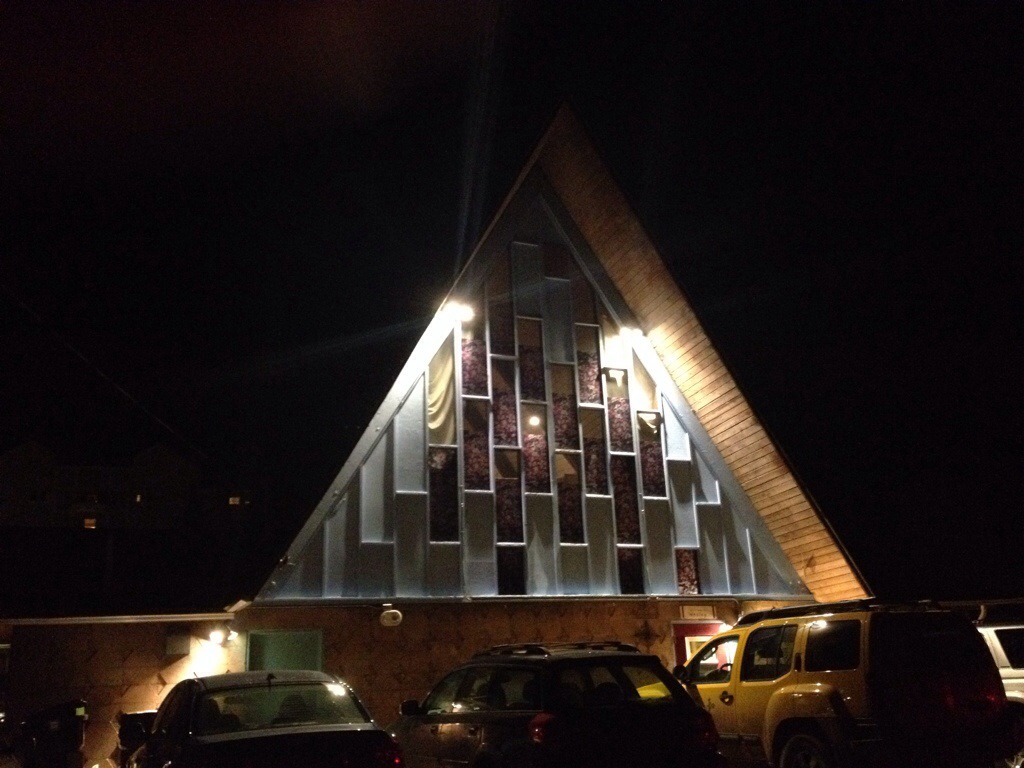
And if all that wasn’t enough, it meets in this funky blue chapel that looks like a chalet:

20150114-205320-75200528.jpg

And that’s why I’m coming back for another season.

Yay!

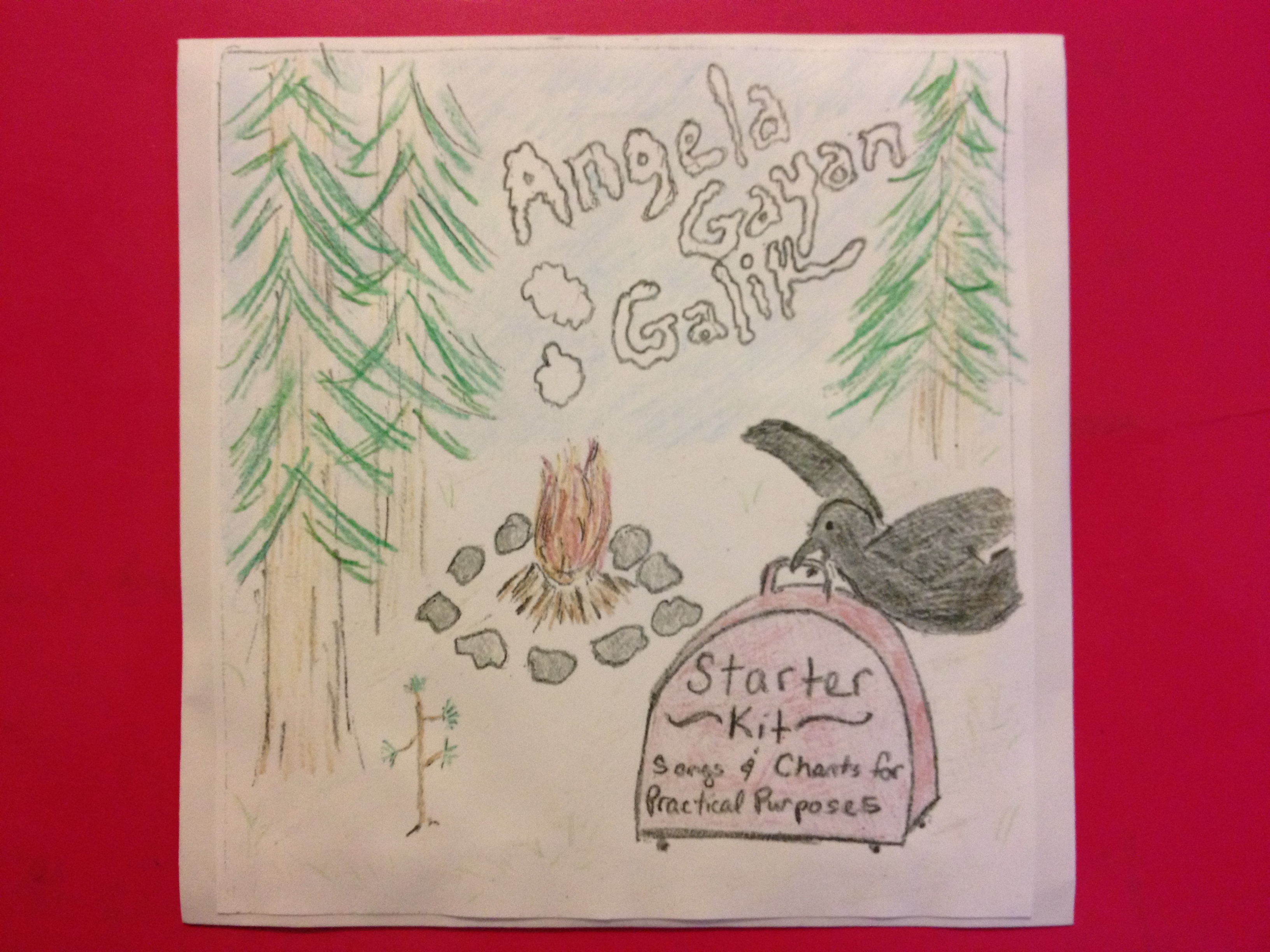
New CD: Starter Kit!

Oh goodness, how did that much time go by? I got caught up in the rapids of the end of the semester. Then, no sooner had I hit “save” on the final grades than I was off to Missouri for Ozark Sufi Camp, and when I got back to Colorado, here it was, time for summer session to start.

And then there’s that old “I don’t want to write about that, that’s boring, but I do want to write about thisthisthisthisthisthis and this, ah, but, maybe later, right now I need to, uh, rearrange all the cans in the kitchen cabinets.” That ever happen to you? No? Must be just me then …

Well, one project I did work on and actually finish during that time was this CD that I made with the help of my friend Jen F., who provided the equipment and technical know-how. It’s called Starter Kit and it’s a collection of songs and chants I’ve written over the past few years. This past spring I started really working with reclaiming my dreams around writing. I started to have a growing sense that before embarking on new projects (or at least while embarking…), it would be good for me to clear out some of the stuff I’d written but never published. For whatever reason, I got the inspiration to make this CD. I had long resisted the idea of putting folk-type songs and chants together on the same album — I planned to wait until I had enough of each to make two separate records. But it just came to me one day that this was the thing to do — collect the songs I have, and let them be available for those who have expressed interest. My goal was perhaps as much to open the flow of writing and sharing as anything else.

So this is basically a DIY project by two women.  I played all the instruments (wow, multi-track recording! I am such a newbie) except for one track on which my partner Sam plays the bass, and Jen did everything technical, including providing the recording location in her home studio.  I wanted to do it all with an intention and an aesthetic of simplicity.  I drew the art for the cover of the CD; that too popped into my head in a sudden flash.  Weird, but honest!  All these ideas, I just went with them, and crossed my fingers that it would sound ok! I frequently quoted Anne Bradstreet in my mind: “In better dress to trim thee was my mind, But nought save homespun cloth i’ th’ house I find,” etc.  But I wanted to take the CD with me on my summer travels, so we took the takes we liked and put it together in a little less than a month.  Craziness! And yes, we had a lot of fun!

Starter Kit Cover

So, you can read more specifics about that CD here on its own page, including how to get one if you want!

In other news, my dad asked me today if I was still working my ass off. I told him, “No, it’s summer; I’m only working one cheek at a time.” That means I actually have a couple of days off in the average week, and I’ll be posting more soon about my travels in the Show Me state, new projects under research, and more thoughts about paradigms.

Until then,
Much love!

The creek's up; now that's "in the flow"!

The creek’s up; now that’s “in the flow”!

Ukulele Contemplation

I belong to a group that meets monthly to study teachings and practices given by Hazrat Inayat Khan and other Sufi masters.  The circle gathers in a comfortable room in a center for Vedic studies that’s housed in a big, one-hundred-year-old Victorian house in Denver.  As the days get longer, our evening classes begin while sunlight still pours through old-fashioned stained glass windows, the sort that decorate the entryways and living rooms of the former homes of the barons of industry.

 This month we began to explore the topic of Contemplation.  For myself, I am truly just dipping my toe in this ocean of wisdom from which teachings and practices come.  But as the woman who guides this class shared a series of quotes describing the way that some Sufis understand the nature of Contemplation, some of the words resonated with me, and a string of lights went on in my brain as it associated these suggestions with other areas of life that have had my attention lately.  For example, she read:

 Contemplation is about relating to something, moving from outside to inside.  The highest form of contemplation is relating to the divine.  Contemplation engages the heart and the sense of meaningfulness.  Love always focuses us.  No one has trouble being concentrated on the Beloved.  Seeing with the eyes of the soul is a good doorway into contemplation.  If the beholding is experienced fresh, if there is an unveiled encounter with the object, then it is a portal into a deeper connection and meaning.  We long to live our lives not just on the surface.  The process of contemplation is the way in to the center.  (The attribution of this passage is “From Ischtar and Gayan.”)

 I think I first felt my spirituality through relating to objects, elements, and plants, the non-speaking, (mostly) non-moving energy entities around me.  I felt a special connectedness to materials like the bricks in the wall of a building (especially if they were old), or the water in a lake, soft and vibrating with life against my skin.  In the long walks I took around my town as an adolescent and teenager, I frequently felt the urgent impulse to stop and touch things, to meet and experience them with the flat palms of my hands and all of my fingers stretched out and receptive.  These interactions opened parts of my being that had, at that time, never stirred in my relationships with human beings.  In fact, I recently started to understand this part of my personality as a capacity to actually be in love with the non-human.  (Now that adds another dimension to polyamory!)

As I continued to follow this pull toward the inanimate world, and to relate with objects as beings, the impressions that formed in my mind began to express themselves in poetry.  This remained a strong theme in my writing in that format – the exploration of ways in which we can see ourselves, our ideas, and the divine reflected in both natural and human-made things, and the existence around us of a variety of beings that we don’t typically recognize as alive.  Though it’s been a long time since I regularly wrote poetry, since I have been doing the practice that I wrote about here, I’ve also found this aspect of my creative self reawakened (to my great joy!).  When I saw the National Poetry Writing Month challenge, I had the strong feeling that it would be really good for me (and my mental health) to participate.  I haven’t written every day, but I’ve written poems on a lot of days this month, and the awareness that the part of me that thinks in poetry is waking up, stretching, and reintegrating itself into my life is – well – awesome.

So all this was the background as I heard the passage that I quoted above.  It hit at least two bulls’ eyes in my heart: the place that has always honored relating with things as a pathway (one among many) to understanding life and the Divine; and the place in which poetry has just woken up, famished, after a long hibernation.

As part of this class, we have exercises that we are supposed to do at home during the month between meetings.  The ones from this month were reviews of previously learned concepts around Concentration, and introductory “first steps into the ocean” of this new topic of Contemplation.  They are designed, it seems to me, to prepare us for and open us to the possibilities of explorations to come.  And one of the gates through which we enter this realm is a practice in which we choose an object to contemplate, and, through a combination of breath, concentration, and interest, get to know the object – inquire as to what its nature is, below the surface of its exterior.  The does not mean to think about the materials or parts that make it up – or at least, not only to do that.  Rather, it’s asking what this object is about, what it’s here for, in the world and in our own vicinity.  It’s becoming receptive to messages and teachings which this object may carry to us from Spirit.  For, after all, as the foundational truth of Sufism, la ‘ilaha ‘illa allah, states (in one way of understanding it, anyway – as always, one among many), there is nothing that is not part of Allah; all of existence is part of Allah; there is nothing that exists that is outside of Allah; there is nothing but Allah.

So today I sat down to try this at home.  I hadn’t pre-planned what object I was going to try contemplating.  My eye first fell on a large conch shell that I brought back from the Bahamas, which now sits on my altar.  I thought it would have a richness of impressions to offer!  But then my gaze wandered over to the right of the altar, where I keep my musical instruments.  And I thought, Hey.  I’d really like to get to know the inner essence of my ukulele.  ‘Cause we work together.  And maybe we could work together even better if I was more aware of what it wanted.

https://mail-attachment.googleusercontent.com/attachment/u/0/?ui=2&ik=ed50c8b27c&view=att&th=13e48c2c14b7e8a9&attid=0.1&disp=inline&safe=1&zw&saduie=AG9B_P_KY4l1v-6jw79MrEFnSIH6&sadet=1367020732709&sads=JjOPQgpll1ot1MC-Vwoxniv0q9s&sadssc=1

I positioned it (okay, I really call it her) on my bed, far enough away that I could see the whole thing without having to move my eyes, close enough that I could see the grain of the wood and my fingerprints on the body from the last time I played her.  I fluffed up the comforter at one end so that she’d be resting on her side at a jaunty angle, and so I could clearly see each of the four tuning pegs.  Then I closed my eyes and watched my breath for a while.  I tried to clear a space in which I could receive whatever awareness she wanted to share with me.  When I opened my eyes, I tried to keep a softness in my vision, allowing for a little blurring of edges, not just of the physical object I was looking at, but of the boundary between ordinary perception and the other, energetic senses.  (I think of Lynn Woodland’s teaching that when we are engaged in spiritual or deep internal inquiry, what comes to us through our imagination is often a communication from our higher self.)  Here are some of the ideas that came to me as I contemplated my ukulele.

First I got some images of the journey of the wood from which the instrument is made.  When my old ukulele broke (it was a very cheap, but very cute, model, with a rainbow and a palm tree painted on the front), I asked my partner’s mother to bring me a uke from Hawaii, where she travels from time to time.  She did bring me one – which, to my amusement, turned out to have been made in China.  No matter, I thought; it had been on the island, it had absorbed something of the vibe, which I could access when I played her.  Now I felt the distance from which the pieces had come, and some trace of the hands of the people who had assembled it; I even got a little notion of the power of the glue that held the parts together. Then I felt the wholeness of the ukulele as an instrument.  I sensed that in her utilitarian design, plain but much sturdier and more resonant than her predecessor, she reflected to me an awareness of the growth and strengthening of my own spirit and my development as a creative person offering words and music to the world.

 I noticed that the shape of her body is like mine: round at the shoulders, round and wide at the hips, with a lot of fretting at the head, and a big hole right over the heart, which is simultaneously the most sensitive, undefended part of both of us, and the only place from which the healing sounds can emerge.

I imagined us just being together, tuning to each others’ pitches.  I tried to hear the music she wanted my to play on her, the pressure of my fingers on her strings that would feel just right to her, and allow her to express what was inside of her.

I got the sense that musical instruments carry an energy of potentiality about them.  At rest, they are still always poised on the cusp of sound.  They are like cords that connect us – the amplifiers – to the divine, say, lead guitarist.  When we take them in our hands, we plug ourselves in to that source, so that the song that is always already being played may flow through us and be heard by others.

But then, she reminded me, we humans are not just amplifiers but also instruments ourselves, not just in our art, but in our whole lives.  So really, my uke and I are more peers than I thought.  Something I read recently on the website of the International Sufi Movement about the heart as an instrument came back to me.  I believe these are the words of Hazrat Inayat Khan, though it’s not stated on the site:

Krishna is pictured in Hindu symbology with a crown of peacock’s feathers, playing the flute. Krishna is the ideal of divine love, the God of love. And the divine love expresses itself by entering into man and filling his whole being. Therefore the flute is the human heart, and a heart which is made hollow will become a flute for the God of love to play upon. When the heart is not empty, in other words, when there is not scope in the heart, there is no place for love. Rumi, the great poet of Persia, explains this idea more clearly. He says the pains and sorrows the soul experiences through life, are like holes made in a reed flute, and it is by making these holes that a player makes the flute out of a reed. This means that the heart of man is first a reed, and the sufferings and pains it goes through make it a flute, which can then be used by God as the instrument for the music that He constantly wishes to produce. But as every reed is not a flute, so every heart is not His instrument. As the reed can be made into a flute, so the human heart can be turned into an instrument, and can be offered to the God of love. It is the human heart which becomes the harp of the angels; it is the human heart which is known as the lute of Orpheus. It was on the model of the heart of man that the first instrument of music was made, and no earthly instrument can produce that music which the heart produces, raising the mortal soul to immortality.

 The instructions for the object contemplation exercise conclude, “We allow the object that we perceive to touch us.  The world is full of meaning when we listen.”  I believe that this is so.  I think that Spirit has many messages for us, and that guidance is ALWAYS there, all around us, in every aspect of our existence – if we are able to read it, hear it, see it, get it.  I believe I’m aware of about one gazillionth part of the continual stream of divine guidance that is beamed directly to my own personal internal satellite dish every microsecond of every day.  But on the other hand, every additional gazillionth that I’m ever able to recognize has an inversely proportional impact on my life: that is, it’s huge.  So the value of contemplation, regularly practiced, is immeasurable.  It puts me into a mindset of wonder, which helps me to make myself, and all the potentialities with which I was born, available for God’s purposes.  In that state of mind, I don’t need to know how the song goes.  Like the ukulele, I just need to be.

Low Strings

I learned to drum in Ubaka Hill’s DrumSong Orchestra at MichFest. I’m sure she wouldn’t even recognize me as a two-time participant (that’s peanuts — although I did have the honor once of doing vocal improv on stage with her and several other women at a concert she did at a church in St. Paul), but from her I learned how to play some basic, passable, serviceable rhythms on the djembe, rhythms which have given me much joy and have helped me to express many songs and chants. It was in those sessions in the tent on those hot August days that I began to understand myself as a drummer, and eventually to claim and own that part of myself.

I also enjoyed Ubaka’s talks on social issues and philosophies of music and sound and drumming. In one of these, she discussed the tendencies of men and women to choose higher or lower drums. Women, she proposed, often liked to play big, low-toned drums to compensate for, or balance out, a high vocal range. Through the drums they could express those parts of themselves that vibrated with deep notes, and men often sought the same balancing with smaller, higher-pitched drums. She drew the connection between the tones of the drums and the chakras, and suggested that women would benefit from playing the smaller drums too, because their sounds resonated more with the higher chakras. … A theory, and reasonable enough, in my opinion.

At the time, though, I remember thinking that I was more drawn (or at least equally so) to the higher-pitched drums and other instruments. I hypothesized that I feel the urge to fill in the high notes because of my low alto singing voice. I’ve always felt self conscious about my upper cut-off, and sometimes, while singing along with a fearless soprano, I feel a blankness where no sound comes out, and wish that I had some way to externalize that feeling, to express it in a vibration that can be heard. When I play high notes on my guitar, or uke, or on a sharp, tight doumbek (which I only wish I could play), it gives me such a feeling of satisfaction, like that pent up sound is finally being let out. The feeling in my chest is as the excess air hissing out of an overinflated tire.

The other night after I was playing the guitar for a while and leading a dance, someone who’s a good guitar player told me she noticed I play only my high strings, never the low ones. I told her my theory about the high notes and the low voice. She didn’t dismiss it, but said that in her opinion, the way I was playing did not make me sound commanding. I said I didn’t want to sound wishy-washy … ! She said it wasn’t that exactly, but she noticed the absence of low notes when I was playing.

I’m a guitar student without a teacher who takes advice and feedback and instruction wherever she can get it. I take it to heart and try to use it to improve myself and my playing as much as I am able. I consider this information. To me it feels like maybe a lack of foundation in my playing, maybe the instability of my fundamental insecurity about whether I will be allowed to play at all, and if I am, whether I will just embarrass myself. Maybe I need to just get over it.

I want to be able to play all the notes. I want to embrace and love every part of myself. I want to shake off that dang insecurity that keeps me down as a musician! So I’ll keep working on it — get knocked down and get up again (in the words of Chumbawamba — I really love that song, not even kidding). My ego gets some message that it interprets as a need for shame. I lose confidence in myself, I think I’m a total loser idiot, I sulk … and eventually I just put it out of my mind, lalalalalalala, and go back to doing the thing I love doing and being goofily grateful that people let me do it. Hm, yeah, I think a little more confidence would soften up that cycle a lot.

Registered!

Tonight I had a very happy experience: I paid my dues and became a registered, active member of the Leader’s Guild for the Dances of Universal Peace!  😀  😀  😀  I confess that I have officially been in training since January of 2012 (yep pretty much exactly a year ago) when I asked Timothy Dobson to mentor me, but have not felt like I could afford the dues until now.  (My mom gave me the money as a Christmas present.  Thank you, Mom!!!)

I am super, super psyched.  The main reason is that I will be able to access the database of Dance write-ups … at last!  Up until now I have been gathering Dances here and there … sometimes quickly scribbling them down in the afterglow of a Dance evening, then figuring out the chords later; sometimes exchanging PDFs with other lovers of the Dances; sometimes pestering leaders to tell me the movements, or chords, or the rest of the words to Dances that spoke to me so deeply that I couldn’t go on without knowing how to play them and teach them and pass them on.  These methods have given me plenty to work with over the past years, and there are several Dances of the collection gathered in this way that I am still learning.  But I have been dreaming of being able to access the huge accumulated body of work that is the PeaceWorks database of Dances.  I can’t wait to be able to immediately follow up with learning all the Dances that I feel a connection with, and find new ones to suit specific occasions.  As I said: Really Excited!!!

This evening I was going through the folder of Dance write-ups and hand-written instructions (sometimes even hand-transcribed musical notation … though it was tedious, I actually had a beautiful time copying from the original Dance booklets at Hakim’s house in Florida … I felt a connection to the old Irish monks) in preparation for leading some singing tomorrow night.  The Sufi Order in Denver just started this new monthly gathering called Heart Song: Sufi Singing and they invited me to contribute.  I felt, and feel, incredibly honored and humbled to be called upon, but also deeply thrilled, because sharing this music is my passion.  I really just couldn’t believe that they would ask me to contribute to the community in this way.  I feel like … I want to do the utmost honor to my teachers by sharing music and leading singing in a way that creates an opportunity for the people participating to really connect with their hearts, to feel a sense of expansion and unity and the joy of praise.  I know those are just some of the things that I get out of this form of music, thanks to the incredible spiritual musicians and song leaders whom I have been very privileged to be around.  Part of me feels like it’s silly for me to think I could ever contribute anything worthwhile, and that my attempting to do so just shows my naivete, or perhaps my upstart-ness … I want to serve with respect for my teachers and with humility toward those I might lead, but of course I question the purity of my attitude.  I’d like to say I know what an idiot I am inside … but sometimes I still surprise myself with new levels of idiocy.  In the midst of this internal muddle about “how to be,” when I have a moment of consciousness I just try to get out of the way and let something come through me.

One of the songs I want to share tomorrow night is from the Dance called “Clouds” by Susan Sheely.  This was one of the first songs I learned to play, back when I did everything on ukulele.  I got to meet this amazing woman this summer, at “The Crestone Experience” Dance Camp.  (She actually led a Dance playing the ukulele!  !  !)  I went up to her and thanked her for composing or bringing through this Dance, and this chant, which have given me so much heart-felt ecstasy.  The best way I can put it is this: The mantra OM MANI PADME HUM is said to be untranslatable, though it uses actual words that gesture toward the concept of a jewel in the lotus heart; it is also said to contain and transmit the whole essence of the teachings of the Buddha.  I feel something similar, though more personal, with this song, with or without the Dance.  It is like the song carries the whole essence of Sufism for me.  It’s like the song is a doorway into another plane of felt knowledge, of understanding beyond mental doubts, beyond explanations.  The words are from a Rumi poem, one of Coleman Barks’ translations.  Each line is repeated twice:

This is how I would die, into the love I have for you,

As pieces of cloud dissolve in sunlight.

La illaha illa’llah, La illaha illa’llah,

Hu Allah Hu, Hu Allah Hu

I looked and looked for a video of this Dance online, but couldn’t find one.  I remember the first or possibly second time I experienced doing this Dance in Columbia with Hakim (going by Hakima then) leading — as I spun out singing “Hu Allah Hu,” I did feel myself dissolving into the light.  As I waltzed with the new acquaintances who would become such close friends, my heart expanded far beyond its previous borders, to include everyone in the room, and the world beyond.  That was one of the moments when I felt released from my usual mental background noise, and fully present with the Divine in myself and in everything and everyone else.  That was when we Danced in the Unity Church hall, which I loved, with its shiny concrete floor and beautiful, dramatic, glittering felt wall hangings.  For me, it was the beginning.

And I remember singing it again with Hakim this fall at Ozark Camp.  We were gathered in the Healing Temple, people sitting all around the room on chairs and bunk beds and floor pillows because it was too cold to sing on the porch.  It was late at night and everybody was finding their own harmonies.  The music filled the room like a golden shimmer; the energy was tangible to a sensitive hand.  My chest opened and my heart soared upward and I thought, This is where it’s at for me.  Everything I need is in this song.

So it’s with great gratitude and honor especially to my beloved teacher and original mentor Hakim, and to all the teachers that I have had, that I go forward on this path, knowing that I have been blessed to sing with and learn from some truly, truly great leaders, with the real gift for drawing out people’s heart songs.  I carry the imprints of these blissful and life-changing experiences within me and I hope that some of the energy of those times may come through what I offer.  I think maybe it’s part of my ministerial calling, to lead and share and join in worship music.  At least at this point in my life, it’s what I love doing most of all.

Okay, I will leave you with this video — it’s not the same as “Clouds” but this chant is another one that early on had the power to transport me out of my ordinary experience and into a more connected state — like maybe the song is the outlet that I plug my cord into … or is it the chord?  Clearly I’ve stayed up past my bedtime writing this, so.  Shakur Allah — the quality of Divine Gratitude — when we give thanks, we experience God within us.  Sweet dreams!

Mich Fest Vision Quest

One of the trips I took this summer with my partner was up to Hart, Michigan for the Michigan Womyn’s Music Festival.

MichFest has always been my partner’s thing, from long before we got together.  He liked to go every year, and so I’ve gone with him every year since I’ve been with him.  (He? Isn’t that festival notoriously womyn-only? You may remember my partner’s a female-to-male transsexual, and he started going to this fest back in his angry lesbian days.  Hey, we’ve all had them, right?  Anyway, you may also know this fest has an official ANTI TRANS policy, so you can imagine what a can of worms it is for him/us to be there.  He’s been productively processing that, with amazing wisdom and beauty, in his writing since we’ve been back.  It’s been cool to see.)

Well, because I am working two part time gigs, neither extremely well paying, and I was making less as a part-time community college teacher in the summer, I was unsure about laying out this big chunk of dough to go to something I knew from experience would be simultaneously both a good time and major drag.  Last time we went, right after his firing from Women’s Studies, between the trans hate, our own issues and the thunderstorms, we un-pitched our tent a night early and departed, growling that we would not be back for a long time, if at all.  Two years later …

I know I tell way too much of the story and take too long getting to the point.  Okay, since I was committed to going but feeling ambivalent, I decided I was going to make the whole journey (we were planning to travel around for another week afterwards visiting friends, culminating (for me anyway) with seeing my Sufi friends and teacher in MO) a sort of vision quest, less in the Native American sense than like Parsifal and the knightly quests of the Grail days.  Since I was going into a big festival of music, getting the opportunity to see a lot of shows, hear a lot of musicians and artists talk about their process, go to workshops like the intensive drumming class I took, and basically be surrounded by creativity in action, I wanted to open myself to greater knowledge and clarity of my creative vision.  I have known I have been pursuing something, but it has been more of an unnamed feeling than even a thought.  I’ve been after something, trying to develop something in me, it has to do with playing and writing music, and maybe other writing too, and teaching (and doing) chant … but it was starting to get a little crazy-making so I decided to make the whole trip a spiritual quest and to seek in all things, from acoustic stage folk music concert to Twilight Zone panty party, whatever information or insight might be there to be found for me.  I tell you, it made things very interesting for me.  It really made me pay attention – I had my antennae up all the time.  I found myself savoring the times I walked alone on the paths – in the company of truly magical trees, mulling over the bits and pieces that came to me.  Though there was definitely upset going on around me, I was having a very close, intimate and sweet time with myself.

I am sure I will refer to more stuff from this time, because it brought a lot that I am still working with (yay! that was what I was hoping for after all), but I wanted to share one of the things that seemed both the most “duh” and also perhaps on some level the most important: and when this came to me I was, in fact, sitting on the grass at a concert at the acoustic stage.  I don’t remember who was playing or what prompted this thought, just that it suddenly occurred to me, It seems I have a lot of anger in my life, and one of the main things that anger attaches itself to is this idea that I don’t have time to play music or write or learn how to play the guitar better, etc. etc.  I would like to reduce the anger in my life because I don’t enjoy being in fights, either with myself or with others.  So – maybe if I devote more time to music and writing, I will actually have less anger in my life.  OMG!  This was like a lightning bolt to me (and incidentally, lightning did actually strike a tree the second night we were on the land.  I brought a piece of it home with me “for use in magic” as they said).  It seems very simple, almost stupidly so – like, why does this seem so profound to me? 

I guess it seems profound, even if obvious, because its implementation makes such a huge difference.  I really did/do have a ton of anger – which is frustration at not following what my heart is pushing me to do, aka my inner guidance, which is strongly suggesting I work on developing my music and writing, counterproductively turned against my own self (if I am self-hating) or my external circumstances (if I am blaming).  It is the blocked energy that has been wanting to go toward these things, becoming something else.   Because I have not been able to honestly acknowledge the importance of those things to me, and the role I really want them to take in my life – as a big part of what I am doing on this planet.  Putting myself out there and committing publicly to the fact that I am pursuing a creative dream of some kind – well of course it raises all sorts of terrifying anxieties of the “who do you think you are, lame-o?” variety.  But when it came down to a choice between actual greater peace of mind and continuing to thwart my own energies, well, one just sounded a lot more enjoyable so there became no excuse not to go for it.

So hence the guitar class that I enrolled in immediately after I got back from this journey.  Hence new commitments about writing, and a lot more experimentation, and, of course, the revival of this blog.  Truthfully the main reason I didn’t want to give it up even though I haven’t written all this time is because I like the name.  Hey, whatever works. 

That’s all for today.  Peace be with you!